

Time to follow up ...
... about the thing we thought the thing would be.

It has been a couple of weeks since, after months of rumination, I shared a concept for developing a regular podcast. Thank you to those of you who responded and let me know what you thought about the idea. Most who did were positive and I appreciate your feedback.
It’s time to take a look at what the response actually was and how I plan to go forward from here. Again, thank you to those of you who responded.

Of the three hundred subscribers who opened the post, fifteen responded in manner that could help provide direction. Nine people engaged by expressing support for the concept and offering ideas that might enhance the original idea. The other six simply unsubscribed.
So, although the concept might have been one that would be fun to do, I’m not pressing on into the development phase. If it were all dressed up and ready to dance, maybe I’d plan a few swirls around the dance hall and see where it went from there. But I haven’t prepped anything beyond the concept. The commitment and energy it would take to develop it fully, create an outline that would provide the virtual “set” for each segment, teach myself all the necessary “how to’s” that would get the me to where I was really comfortable doing it1, reach out to potential participants to populate a schedule, and then build the audience to a size I’d consider sufficient for the guests I’d like to engage - well, that just feels bigger than the interest warrants.
But you promised ….
I know. I know. I promised a podcast. And you’re going to get one. But it isn’t going to involve other people. It will just be me.
Well, not just me. It will involve someone else, but he’s already agreed: my partner, Scott. And he is totally committed because it was his idea!
(That’s him playing one of his original pieces - It is Love - on our old Bell as it was being disassembled to make way for a new hundred-year newer Kawai.2)
And, no, we’re not going to be talking about marriage, working together, or aging gracefully. We’re going to do what we used to do together every week while we shared leadership at West Hill United.
We’re going to recreate and share with you the Focused Moments we used to bring to the congregation each Sunday.
That moment
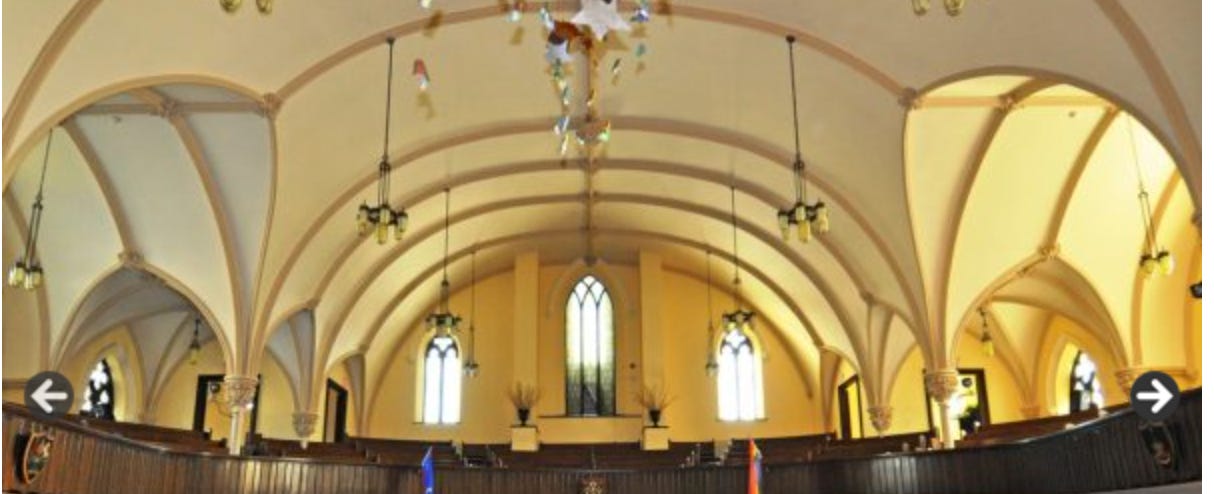
A few years into the unfolding transition at West Hill, it had become impossible to find liturgical resources that reflected the emergent worldview into which our Sunday Services (now Gatherings) needed to be grounded. Embracing contemporary religious and theological scholarship meant moving beyond belief in a supernatural deity. In turn, that meant leaving behind resources that revolved around that most basic of traditional theological principles: belief in the god called God. Coming up with new words for the various, traditional elements of a Sunday service became a challenge.
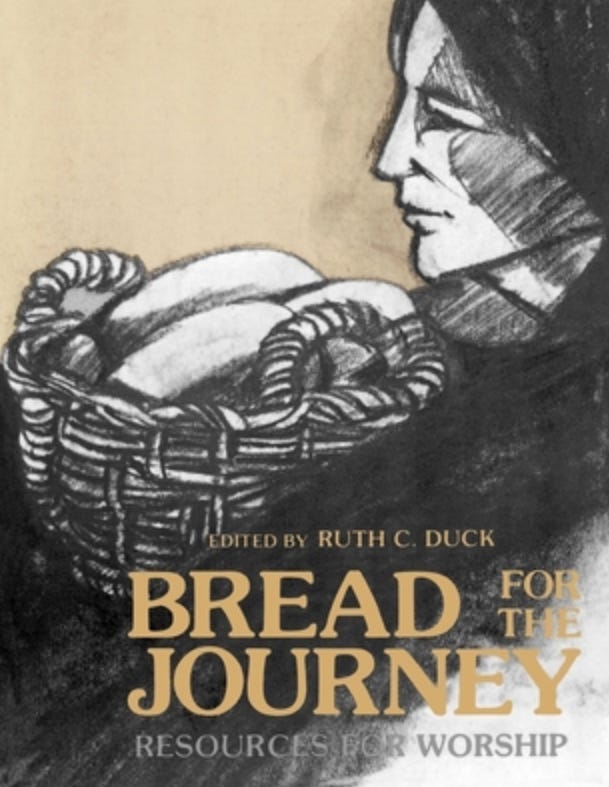
Throughout my ministry, I had often turned to resources created for congregational use by some of the most brilliant contemporary liturgists, poets, and songwriters of the day. Their work had been inspirational and their books were earmarked from much use in the services I created and led. Those services were supported with songs by Ruth Duck, liturgies by Maren Tirabassi, prayers written by other clergy and shared by Progressive Christianity, (then The Center for Progressive Christianity), and anything I could find that inspired a sense of belonging within meaningful and meaning-making community. So many clergy were privileged by the gift of extraordinary, beautiful, and heart-rendered resources written by incredibly talented and generous liturgists.
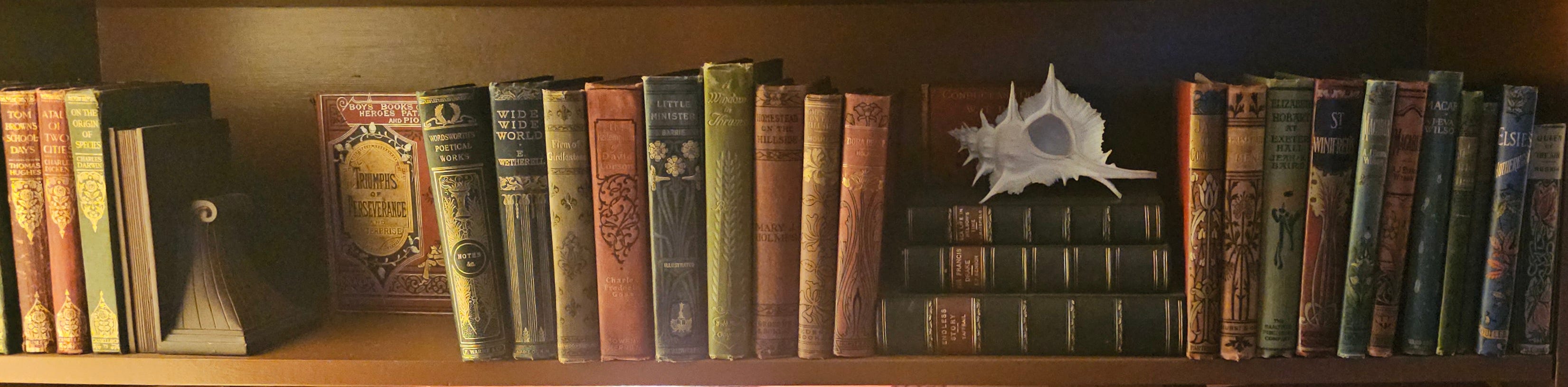
As the many books of liturgical wonder that had lined my shelves over the years retreated into the past, it was necessary to find something else to take its place. What had drawn me to them was their poetic nature. Poetry, then, could be the answer. After all, the world, itself, is filled with poetry. And because so much of it is, by its very nature, inspirational, situating it in a liturgical setting seemed perfectly natural.
So, take a deep breath, close your eyes, and try to imagine me sourcing a single, perfect poem that would slip seamlessly into the place normally held by traditional prayer for use in a service I’d prepared for the coming Sunday on the growing need for faith-based environmental action - or any topic of your choice - and lift the theme to a new level of understanding, beauty, clarity ... … … … …

Yeah. That’s exactly what happened. A few familiar poem possibilities might quickly come to mind, but if you had to reach for your favourite search engine to find something, you’ll have been buried with an avalanche of possibility.
Sigh.
Poetry
There can never be too much poetry. If you step into its vaulted libraries with a view to finding something specific, however, the lines you seek will evade you every time. Poetry is not a searchable database. Poetry is a gift you come upon, sometimes when you’re not yet ready for it and sometimes when it is exactly what you didn’t know you needed. Sometimes you can read the same poem over and over again, feeling it anew with each read3, and sometimes, the first time you meet it, it embeds itself in your heart so completely that it remains with you the rest of your life4.
Clearly, scanning the growing number of online poetry databases was not going to provide me the material I needed within the weekly timeframe demanded. At some point, frustrated in my attempts to find material I could use, I realized that I was going to have to write my own calls to worship gather, my own words to hymns songs, my own prayers poetry to focus us on what was important or relevant for each week’s gathering. I began sitting down at the administrator’s computer on Friday mornings and typing an opening prayer into the service bulletin.
I didn’t think of those “prayers” as poems, though. They were just little liturgical thingies that resembled a non-rhyming poem, the simple purpose of which was to draw the congregation’s attention to the work we would do that Sunday morning. Or something like that. Sometimes they were about justice. Sometimes they were about the stress of contemporary life. Sometimes they were about beauty. At least once, they were about the growing need for faith-based environmental action!
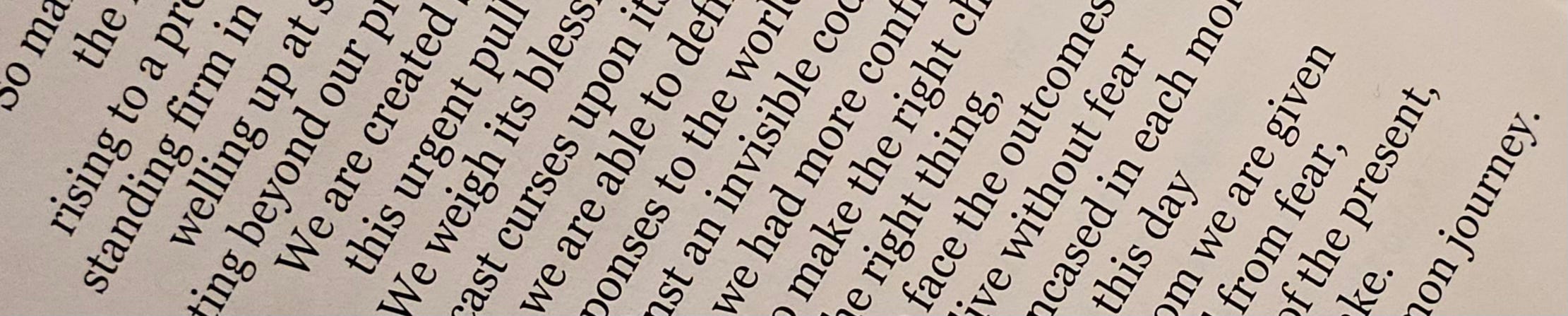
But always, the pieces I hammered into the service bulletin on Friday morning were about the topic I would address that week. They were relevant to what I would place before the congregation on Sunday. And after a few years, I stopped spontaneously typing them into the bulletin on Friday mornings, stopped referring to them as Prayers of Approach, and started writing them while I was preparing the service. At home. After reading and writing, and putting the rest of the service elements - hymns, readings, etc., - together. And I began calling them “Focused Moments.” Because, of course, I’m not a poet, so they can’t be called poems….
Becoming more
I don’t remember when it happened, but one Sunday, Scott chose to accompany my Focused Moment on the piano.
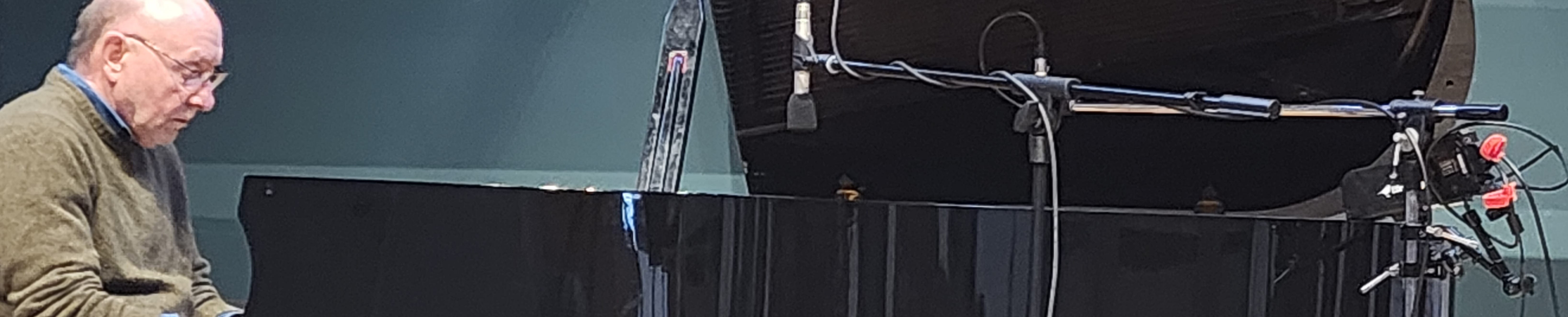
It may have been a special service that inspired him to play underneath my words. Or it may have been just because he felt moved to do so. It certainly wasn’t because I told him to; it would never have occurred to me to ask him to do that. And it certainly wasn’t because on that particular Sunday he was moved by the poem itself; Scott didn’t have access to the text and that’s simply because I never provided him with it. But after that first time, every following Sunday, as Scott perfectly tuned his gifts to what I was newly learning to offer, the Focused Moment became more than just the reading of a poem. It became part of the expansive beauty that West Hill created and continues to create.
PoetryCast
So that’s what we’re going to do. I’ll read Focused Moments I’ve written in the past5 and Scott will accompany them. And I’ll write new ones about contemporary events or moods or challenges and Scott will accompany them, too. A friend has suggested that creating short videos of them is not outside our reach and we’ll see if that works out. If it does, we’ll add those to the project.
I’m delighted that Scott and I are doing this together. It will bring back into my life a bit of the magic that filled our time in shared leadership at West Hill. Indeed, the whole of my West Hill ministry was rather magical, itself, allowing a new way of being church to emerge within an established denomination. Bringing this little bit of it to you will be a lovely part of our going forward together.
West Hill is evolving under the leadership of Joe Pettinger and Martin Frith. Their gifts, energies, and vision will allow the congregation - those gathered in the room and those who engage from afar - to continue to ground itself the familiar services and practices it has evolved over the years while growing itself through new and innovative ways of being together. It is a challenging and an exciting time for a congregation like West Hill. So, if you’re not already engaged, please reach out to Joe or Martin or simply check out West Hill’s Sunday Gatherings by joining the congregation in Scarborough or from wherever you are via Zoom. Here’s the link to do so or you can find it on West Hill’s website.

I am so grateful to be on the journey with you. Thank you for showing up, for leaning in, for being present to the people in your life who need you, for finding a little bit of inspiration here that helps you do that. Alone, we are one. Together, we are amazing.
A separate note for these times of uncertainty
Even as I write about the beginning of this project, one I hope will be an inspiration to you, I must share with you my deep concern about what is happening in our various countries. I can’t turn my mind away from the devastations that are shared on major news outlets, and I cannot enjoy the privilege of not knowing what is sanitized or edited out of their newsfeeds. Disinformation is a fast-selling, much-traded global commodity, marketed for the purpose of controlling public opinion and manipulating political systems. The amalgamation of news and social media platforms cripples our ability to access truth and place it in its true context. It becomes our personal responsibility to source information from places we can trust and keep up to date as best we can. Go a step or a few further and share the sources you trust with others. Engage in conversation in your community. Set up or participate in a news chat online or start one at your local library. Engage your politicians. Truth is crucial right now; share everything you learn with at least one other person. Show up. Speak out. Refuse disinformation.
As Christmas approaches, it is a good time to remember that half of the world’s population exists on only two percent of its wealth. If you’re not in that bottom two percent, be generous in every possible way you can. Be bold in your giving. Show up where there is need. Show up where joy is in short supply and bring laughter, warmth, financial support, and love. Circumstances of birth, geography, race, gender, sexuality - they all crash in together and create the corrosive inequity that’s somehow become known as “normal”. It’s only normal because we continue to tell ourselves that. But we must begin to be honest about how crazy that scheme is. It is not normal. It is wrong. Let’s do something about it, beginning with Christmas. And let’s not just do it because it is Christmas. Let’s commit to making everything different all year long. If you’re able, find a charity to support, a neighbour to help, a place to volunteer, a conversation to begin. It will make a world of difference even if only to one person’s world.
If you are in need, do not be ashamed; this is not your fault. We live in a system that is not set up to work for the benefit of all; it is set up to privilege the few - three-quarters of the world’s wealth is held by only a tenth of its population. Reach out to the people and places that can help. If you don’t know where they are, find out. Just asking someone for help is the most important thing you can do. I know what it is to believe there’s no answer to a situation. It can and will silence you forever if you let it. Do not let yourself be silenced. Do not believe there is no solution. Ask the questions. Ask for help. Go with a list. Go with your dignity. Tell them what you need from them. Be brave and be honest.
As this year comes to a close, let’s all find ways to make the year into which we spin one of joy, honesty, courage, and love not only for ourselves: for everyone.
While recording Amen, I became comfortable with pre-recording on Adobe podcast. But managing a podcast would require a whole new set of skills": adding guests; editing; adding music; dealing with more than one guest in two different places. The learning curve was going to be straight up for quite a while.
Scott has written two books of music, The Wonder of Life, 2005, and Songs for Anyone, 2018. Both are available for purchase. Please email me if you’re interested.
Scott often reads me Longfellow’s “The Day is Done” as I settle myself into bed after a long day. I don’t think he’s ever finished reading it without my eyes springing tears at a some point along its lyrical path.
Dover Beach by Matthew Arnold is one of the poems that embedded itself in my heart the first time I read it many years ago. If you read a poem that slays you, read everything you can by that artist. And go to spoken word events. Dwayne Morgan, Tracy J Francis, Randell Adjei, and Jamaica Osorio have changed me by leading my heart to challenging new places.
Over the years, the following collections of Focused Moments have been “self-published” and are available for purchase. Holy Breath, 2004; Another Breath, 2009; We All Breathe, 2012; Take a Deep Breath, 2019. Please email me if you’re interested.